CYVIATION Featured in Foxtrot Delta Aviation Security Special Edition
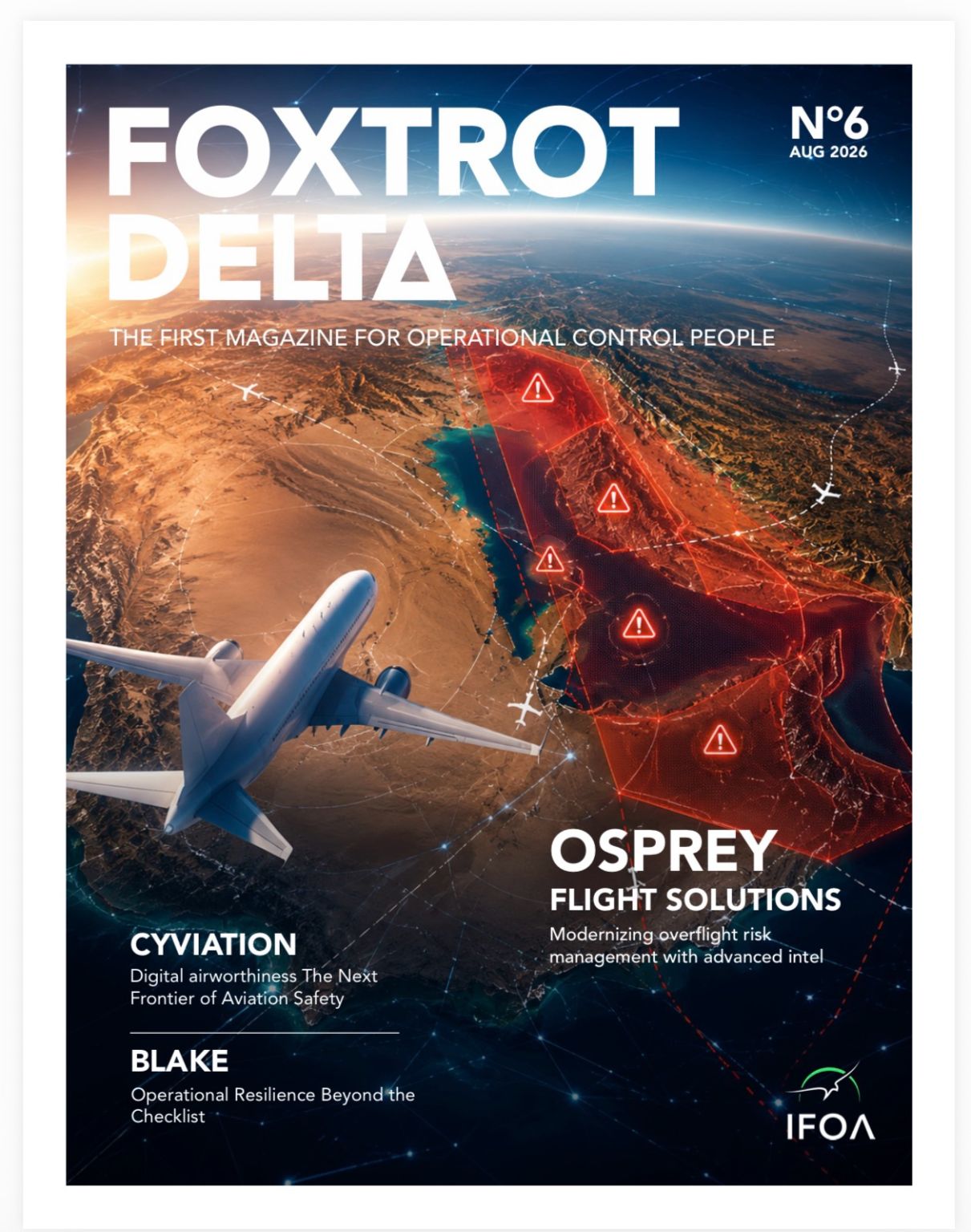
CYVIATION is featured in the latest special edition of Foxtrot Delta, the aviation operations magazine published by the International Flight Operations Academy.
The August 2026 edition focuses on aviation security risk analysis and its growing influence on operational decision-making. It brings together perspectives from CYVIATION, Osprey Flight Solutions, and Blake Emergency Services to examine how evolving threats are changing the responsibilities of pilots, dispatchers, operational control centers, and aviation security teams.
CYVIATION CEO Eliran Almog contributed the article, “Digital Airworthiness: The Next Frontier of Aviation Safety.” The article examines how aviation’s dependence on software, connectivity, satellite navigation, and digital data is creating a new dimension of airworthiness.
While traditional airworthiness focuses on the physical condition of an aircraft, digital airworthiness considers whether the systems, data, software, configurations, and connected interfaces supporting the aircraft remain safe, trusted, resilient, and operationally fit throughout its lifecycle.
The article highlights the operational consequences of GNSS jamming and spoofing, manipulated or unreliable data, legacy communication protocols, and limited visibility into aircraft configurations. These are no longer purely technical cybersecurity concerns. They can affect situational awareness, dispatch decisions, crew workload, regulatory compliance, and operational continuity.
Almog also identifies a growing responsibility gap. Operators are increasingly accountable for aircraft cyber risk under requirements such as EASA Part-IS, while much of the information needed to assess that risk remains distributed across manufacturers, suppliers, avionics providers, connectivity partners, and maintenance organizations.
To move forward, the article outlines three priorities for the aviation industry: continuous visibility into digital aircraft configurations, the integration of cyber risk into operational decision-making, and the shared reporting of digital integrity events.
Aviation spent decades developing continuous airworthiness around mechanical integrity. As aircraft operations become increasingly dependent on trusted data and connected systems, applying the same discipline to digital integrity will be essential to maintaining aviation safety in the years ahead.